
Start at the end. Here is a finished fourteen second radio spot:
Nobody opened a stock music library. Nobody booked a voice actor. That is three API calls and about a minute, and the whole thing costs less than a stamp.
Now take it apart.
Three calls, one spot
The music came first. Describe the track you want, and two different versions come back for one price. You are never stuck with the first thing you hear. You get to choose.
Music prompts have levers that image prompts do not, and they are worth knowing. Tempo, key, instrumentation and an explicit list of things to avoid do most of the work. “Upbeat corporate music” gets you a stock library cliché. This does not:
upbeat optimistic tech advert instrumental, 110 BPM, major key, warm analog synth arpeggio, soft four-on-the-floor kick, backbeat claps, bright marimba melody, confident and friendly, clean ending
Avoid: vocals, distortion, heavy metal, aggressive
Then the read, then a chime on the end card. Two more calls, seven cents between them.
The same line, three voices
This is where the spread gets silly. One sentence, three engines, prices that differ by more than ten times:
All three are reading this, word for word:
Your agent can already write the copy. Now it can read it out loud, score it, and hand you the finished cut.
The expensive one is not automatically the right one. It depends entirely on whether you want warm, brisk or authoritative, and the only way to find out is to hear all three, which costs under four cents and takes about six seconds. That is the whole argument for a wide bench over a single subscription.
Voices also take direction. Grok reads inline tags, so you can ask for a pause or a whisper in the middle of a line:
In a world… where every API demanded a credit card… [pause] one agent had a balance. <whisper>And it spent it wisely.</whisper>
And the small sounds
Interfaces need sounds and nobody wants to go shopping for them. Five cents, twenty-two seconds maximum, described in a sentence:
The first one is the chime on the end of the spot at the top of this page. It was asked for like this, and arrived first try:
A single bright electronic coin-pickup chime, like a payment confirming: short, clean, satisfying, with a soft tail.
Now let it write a song about itself
It will write the words too, and then sing them. Three cents for the lyrics, eleven for the recording.
We asked for the words first, from the point of view of an AI agent that finally has its own spending balance. It came back with a chorus:
I got my own balance
Yeah, I’m on my own balance
Pay the API, then I dance
I got my own balance
(not bad for a machine)
I got my own balance
Now I can keep the whole thing green
Then we picked the genre and it sang them. The words never changed, only the brief for the music around them:
Ten clips. Forty cents. One balance.
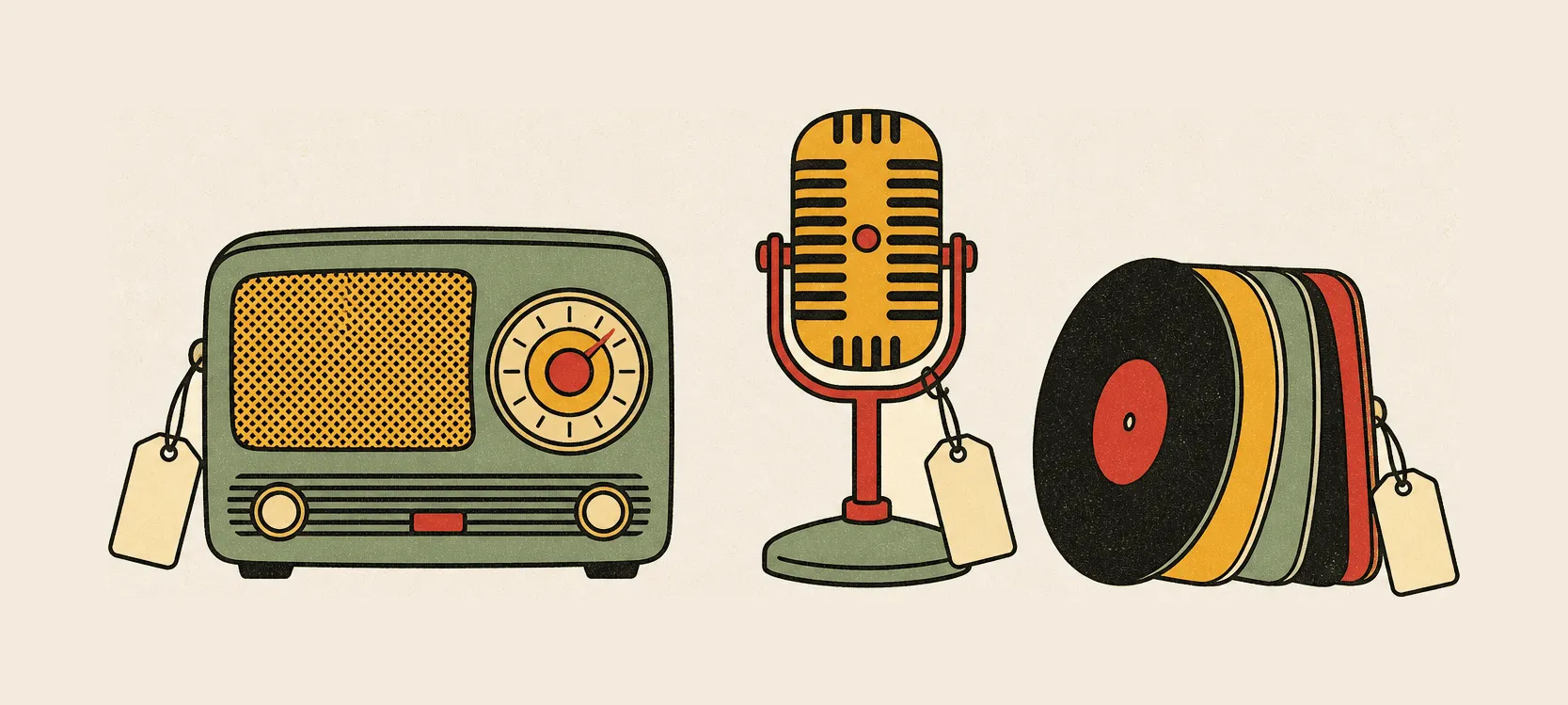
Every price on this page is what the balance was actually charged, and your agent can read each one off the endpoint before it commits, so none of them arrived as a surprise. The spot at the top is its three calls added up rather than a fourth one, so all the audio here comes to forty cents, and the illustration was another thirteen. That is the bill for the whole page, not the price of one track, and there is no stock library subscription, no voice-over marketplace, no accounts to open and nothing to cancel.
Your agent can already write. Let it do the sound too.
Connect your agent and the first $5 is on us.
Write and record a fifteen second radio advert for my product. Give me two music beds to choose from, read the script in three different voices so I can pick, and put a confirmation chime on the end card.
